
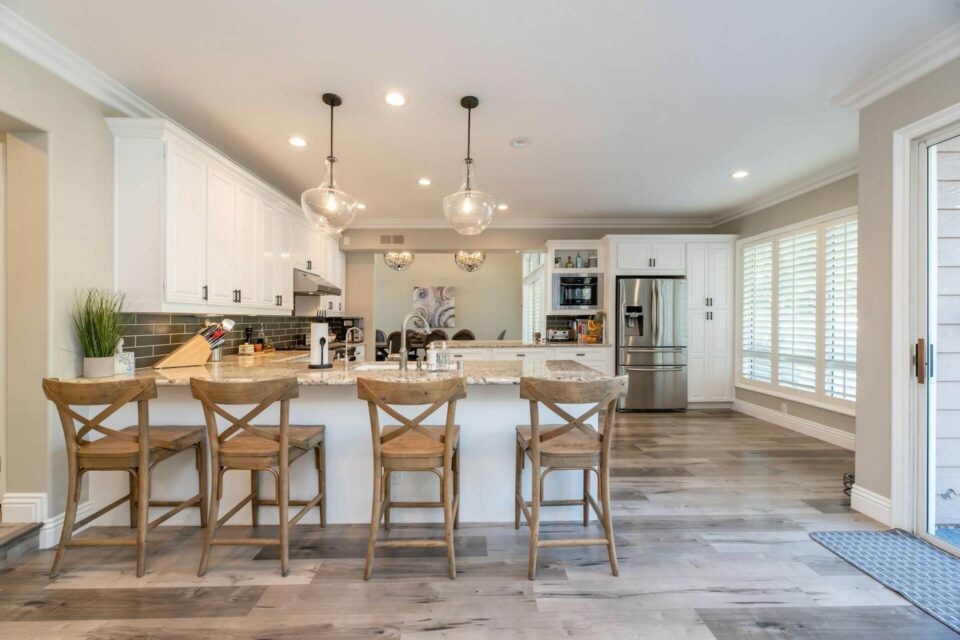
Choosing countertop materials involves balancing aesthetics, durability, maintenance, and budget. With so many excellent options available, understanding the pros and cons of each material helps you make an informed decision.
Quartz has become incredibly popular, and for good reason. This engineered stone offers the beauty of natural stone with superior durability and virtually zero maintenance. It resists staining, doesn’t require sealing, and comes in an enormous range of colors and patterns. The main drawbacks are heat sensitivity and the inability to achieve the completely unique look of natural stone.
Granite remains a classic choice, offering natural beauty and excellent durability. Each slab is unique, providing one-of-a-kind character to your kitchen. Granite handles heat well and, when properly sealed, resists staining effectively. However, it requires periodic resealing and certain acids can etch the surface.
Marble delivers unmatched elegance and a timeless aesthetic. Its cool surface makes it ideal for baking and pastry work. However, marble is porous, prone to staining, and susceptible to etching from acidic foods. Many homeowners choose marble for specific areas like baking zones while using more durable materials elsewhere.
Butcher block brings warmth and natural beauty to kitchens. It’s gentle on knives, can be sanded to remove scratches, and creates a cozy, inviting atmosphere. Regular oiling maintains its appearance, and while it can stain and burn, many consider the patina that develops over time part of its charm.
Solid surface materials like Corian offer seamless installations and easy repairs. They’re non-porous, stain-resistant, and available in many colors. While not as heat-resistant as stone and susceptible to scratching, damages can often be sanded out.
Consider mixing materials strategically. A durable quartz perimeter with a marble island or butcher block baking station provides both practicality and visual interest.